
/ / LEVEL 6
Service Designer Apprenticeship
Build the service design capability your organisation needs to improve services, understand users and create better end-to-end experiences.
+ Non-levy
User-centred service improvement
capability
We help employers build practical service design skills, supporting teams to understand user needs, redesign services and improve experiences across channels, teams and touchpoints.
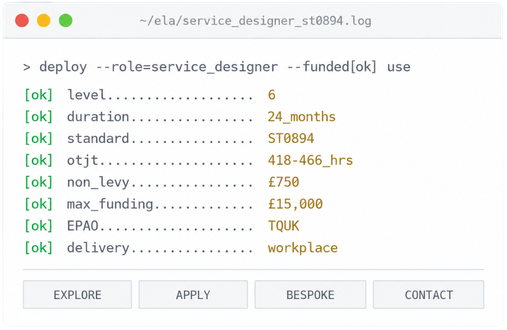
Level 6
Apprenticeship
24 Months
Duration
418 - 466 Hours
OTJT Minimum
Workplace
Training
£750
Non-levy employer contribution
ST0894
Apprenticeship Standard
EPAO
TQUK
// THE CHALLENGE
Services often grow
over time
Services often grow over time, becoming difficult for users to navigate and hard for organisations to deliver consistently. The challenge is understanding the whole service and designing improvements that work for users, teams and the organisation.
Fragmented services
Poor user experience
Unclear service journeys
Limited insight into user needs
WHY ELA?
Employer-focused delivery
Practical workplace application
Flexible guided learning support
// PROGRAMME OVERVIEW
Level 6 Service Designer Apprenticeship
The Level 6 Service Designer Apprenticeship helps organisations develop the capability to explore, improve and redesign services using user-centred, collaborative and evidence-led approaches.
Ideal for employers who need:
- Better end-to-end service journeys
- Stronger user insight
- Improved customer or citizen experience
- More joined-up teams and processes
- Evidence-led service improvement
- Support with transformation and change
Typical learner profiles:
- Service improvement staff
- Business change professionals
- Customer experience staff
- Digital transformation staff
- User research or UX team members
- Project, policy or operations staff involved in service change
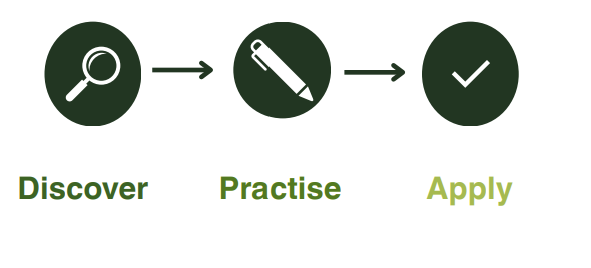
Delivery model
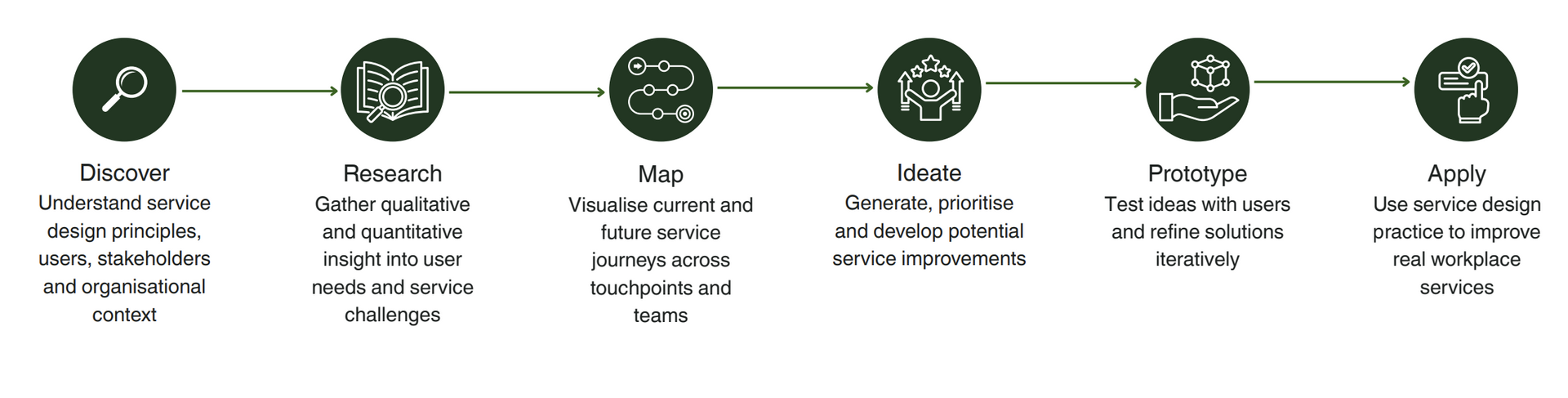
// Learner Journey
From Service Insight to Better User Experiences
// PROGRAMME THEMES
Build strong foundations in service design
Build strong foundations in service design, user-centred practice and organisational context. The standard includes understanding service design theory, when service design practices can be used, user-centred design approaches, and qualitative and quantitative research methods.
1 - Service Design Foundations
Introduces the principles, purpose and value of service design within organisations.
Topics
- Service design principles
- User-centred design
- Design thinking
- Service ecosystems
- Organisational context
2 - Research and User Insight
Builds the ability to gather, analyse and interpret evidence about users, services and organisational needs.
Topics
- Qualitative research
- Quantitative research
- User needs
- Research ethics
- Insight generation
SKILLS DEVELOPED
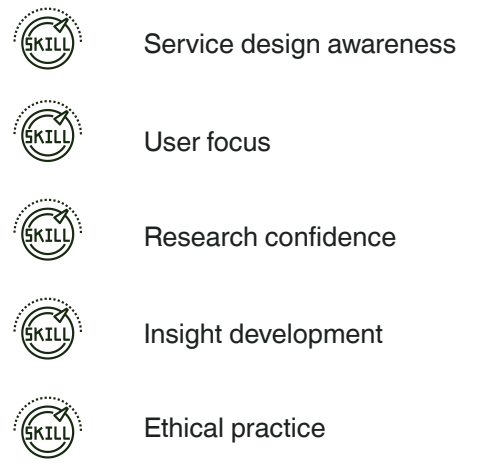
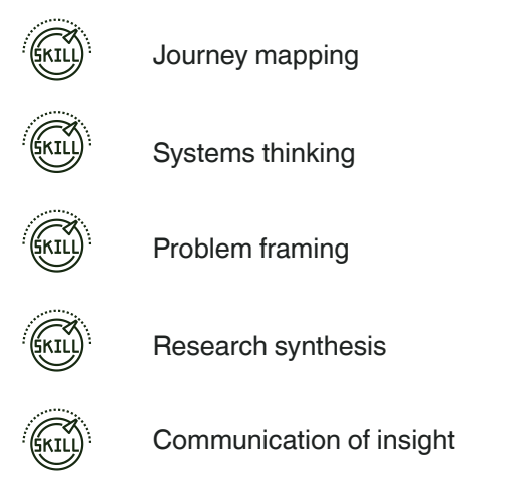
Develop the skills to map services
Develop the skills to map services, define problems and communicate service opportunities. The occupation includes mapping current and future service states, analysing research to identify insights and opportunity areas, and challenging design briefs to determine the scope of service design work.
3 - Journey Mapping and Service Analysis
Develops the ability to map current and future services, identify pain points and build a shared view of the user journey.
Topics
- Service journeys
- Current-state mapping
- Future-state mapping
- Touchpoints and channels
- Front-stage and back-office processes
4 - Problem Framing and Opportunity Definition
Builds confidence in interpreting research, challenging assumptions and defining the right problem to solve
Topics
- Design briefs
- Problem statements
- Research synthesis
- Opportunity areas
- Evidence-led recommendations
SKILLS DEVELOPED
// WORKPLACE APPLICATION
Turning service design learning into better experiences
Learners apply service design methods to real workplace challenges, helping organisations improve services, reduce friction and create better experiences for users and stakeholders
What employers gain
- Better understanding of user needs
- Clearer service journeys
- More joined-up teams and processes
- Improved customer or citizen experience
- Evidence-led service improvement
What learners build
- Confidence using service design methods
- Research and insight skills
- Ability to map and improve services
- Workshop and facilitation experience
- Professional design behaviours
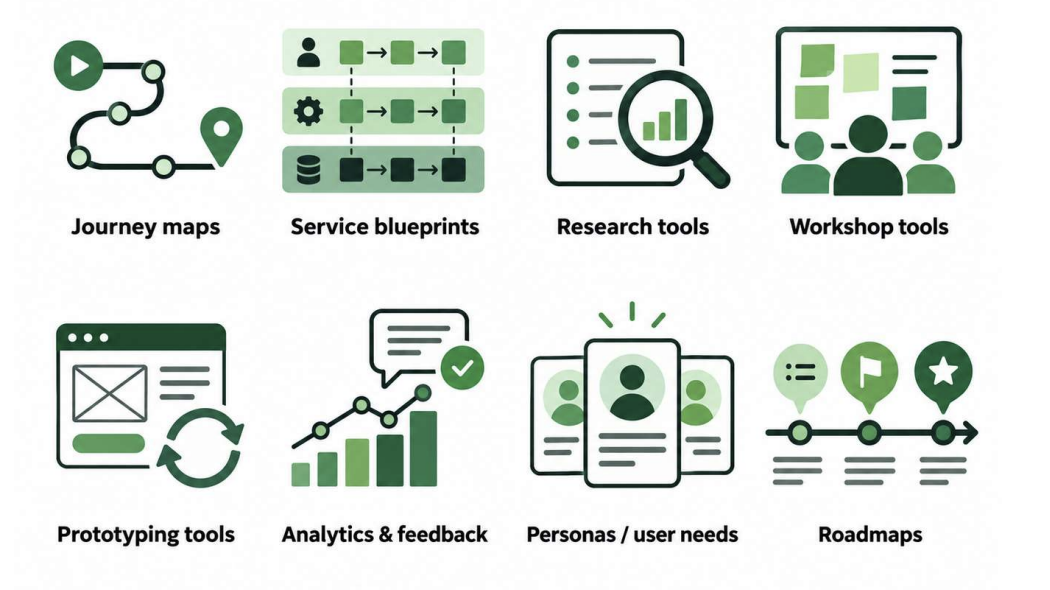
Tools & Technologies
Supporting service research, journey mapping, collaboration, prototyping and service improvement.
End-Point Assessment
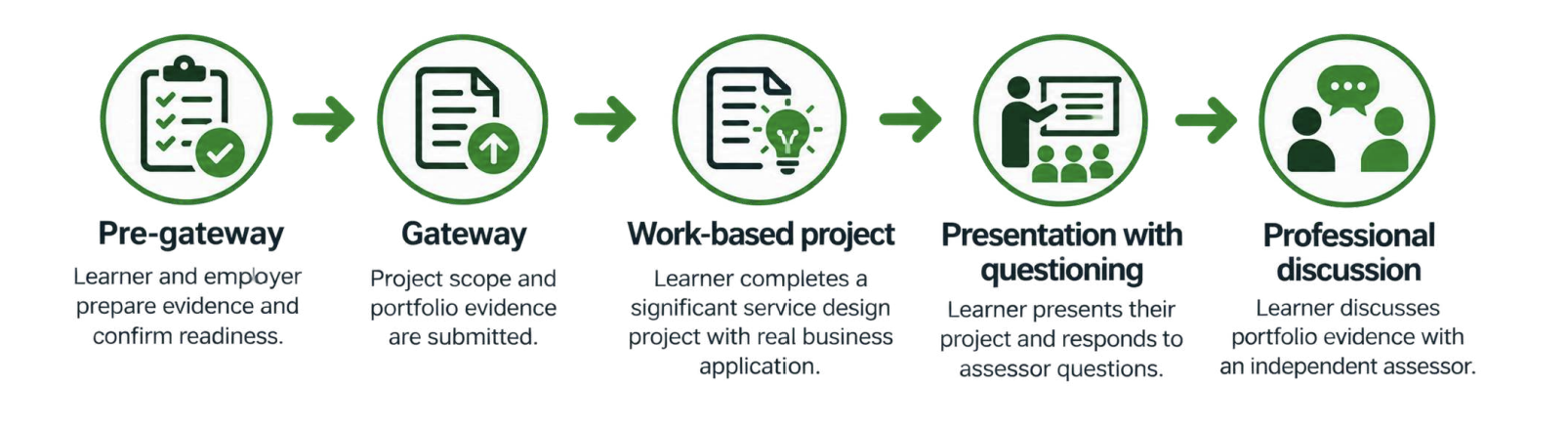
Learners demonstrate how they can apply service design knowledge, skills and behaviours through a work-based project, presentation, questioning and professional discussion.
Career Progression
Opening the door to service design, customer experience, transformation and user-centred change roles - helping learners build the skills to improve services across sectors.
Service Designer
Design and improve services around user and organisational needs.
Experience Designer
Design and improve services around user and organisational needs.
Human-Centred Designer
Design and improve services around user and organisational needs.
Service Improvement Lead
Identify opportunities to improve services,
processes and outcomes.
Transformation Consultant
Support organisations to redesign services
and deliver change.
Ready to build stronger service design capability?
Whether you’re improving services, redesigning user journeys or developing confident service design talent, ELA can help you take the next step.
Invest in your people. Strengthen your service design capability. Build user-centred transformation talent.